What makes America America?
101 honest answers to the questions behind America — the amazing parts, the weird parts, and the hard parts people still argue about.
Short answer first — then the story underneath.
“An absolute blast to read.”
“This book will be relevant 250 years from now.”
One question becomes five. Five becomes twenty.
Before long you’re debating whether America almost adopted the metric system, why we have an Electoral College, or why the U.S. Army once experimented with camels. And you’re wondering what comes next.
That’s the point.
This isn’t a book to finish.
It’s a book to keep opening.
Open anywhere. Read one answer. Accidentally read ten more.
Explore America’s story room by room.
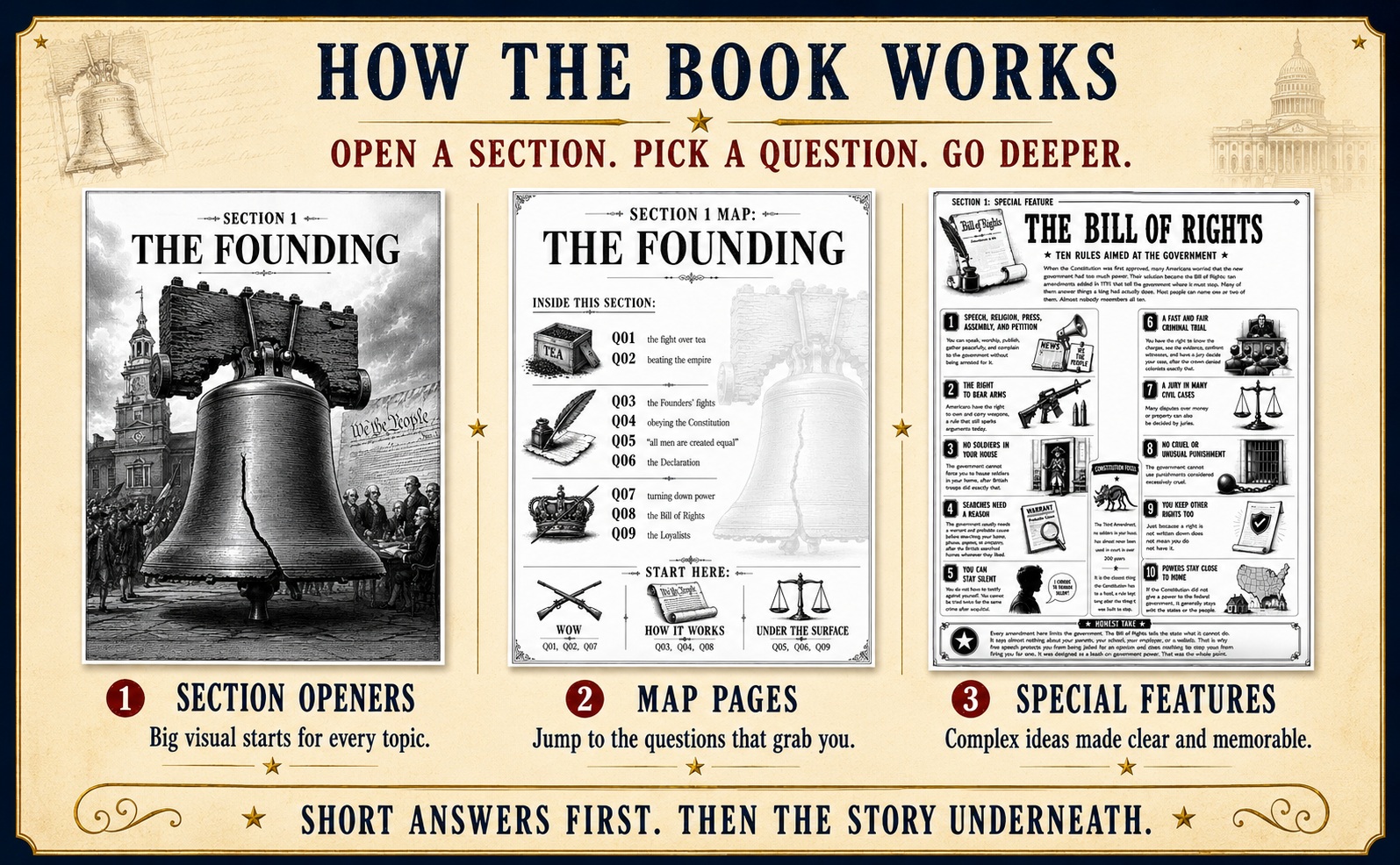
America 250: What Makes America America is a mini-encyclopedia you can wander — a visual museum of 250 years of American history, walking from one room to the next. From the founding to the future, every big topic gets its own honest room, and the hard parts don’t get skipped.


Open a section. Pick a path. Go deeper.
Every section opens with a big visual, then a map page to the questions inside — short answer first, then the story underneath. Plus special features that unpack the big ones — the Bill of Rights, the economy, the Grand Canyon, and more.
Created to celebrate America’s 250th through questions instead of lectures.
Yes. It celebrates America — by understanding it. Not by pretending it’s perfect.
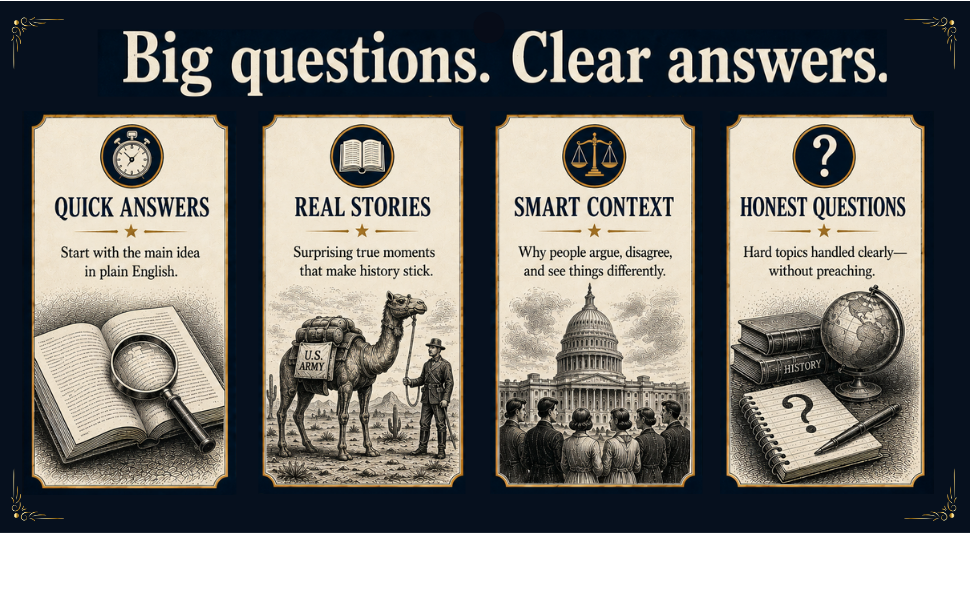
A few real questions, answered honestly.
Here’s exactly what you get, 101 times over: a real question, a short answer first, then the story underneath — with a weird true fact along the way. Click any one open to see the full page.
Question 3 of 101 · Section 1: The Founding
Q03. What Does the Declaration of Independence Say?
History’s most famous breakup letter.
SHORT ANSWER: It declares the colonies free and then spends most of its length explaining why.
▾

People remember one line, all men are created equal, and assume the whole document is lofty philosophy. It is not. After a short, famous opening about rights and equality, the Declaration turns into something blunter: a long list of specific complaints against King George III. Taxes without consent. Soldiers forced into people’s homes. Trials denied. Judges controlled by the crown.
That was on purpose. The colonists were not just announcing independence. They were building a case, to the world and to history, that they had real reasons and were not simply throwing a tantrum.
The opening gets quoted every Fourth of July. The complaints almost never do. But the complaints are the part that turned a feeling into a formal charge.
The famous line told the world what they believed. The list told the world why they were done.
Question 31 of 101 · Section 4: It Sounds Fake
Q31. Why Can You Cross the Whole Country Without Hitting a Single Red Light?
The largest thing America ever built was pitched as a way to survive a nuclear war.
SHORT ANSWER: Because the whole interstate was built as one sealed-off system with no cross streets and no lights, for reasons that had little to do with road trips.
▾
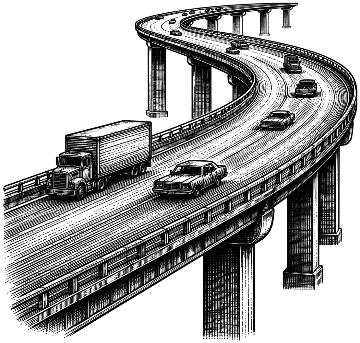
In 1956 the country committed to a network of high-speed roads linking nearly every major city, with no intersections and nothing to stop for. It became the largest public works project in American history, and you can still drive coast to coast without once touching the brake for a light.
The name explains the why. Officially it is the System of Interstate and Defense Highways. Eisenhower had crossed the country by Army convoy back in 1919, a trip that took two months on roads that barely existed. The Cold War sold the rest: roads good enough to rush the army anywhere, and to empty the cities if the bombs ever came.
It worked, and it remade the country. Suburbs spread because people could now live an hour from work. Downtowns and passenger trains thinned out. And the routes often ran straight through poor and Black neighborhoods, where land was cheap and the residents had the least power to stop it.
It was built to move an army and outrun a war. The war never came. The roads rearranged the country anyway.
Question 50 of 101 · Section 7: Very American Things
Q50. Why Does America Use Different Words, Miles, and Fahrenheit?
America almost went metric. Then it got robbed.
SHORT ANSWER: Because America stopped changing before much of the rest of the world did.
▾
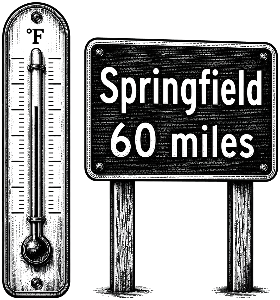
Most countries measure distance in kilometers, temperature in Celsius, and often spell words a little differently. Americans drive in miles, check the weather in Fahrenheit, and write words like color, center, and traveler without some of the extra letters found elsewhere.
The measurement part is mostly a history accident. When much of the world switched to the metric system during the 1800s and 1900s, the United States never fully joined. Americans were already using miles, pounds, and gallons, and changing everything would have been expensive and confusing. So the country mostly kept what it had.
The spelling part was more deliberate. In the early 1800s, a teacher and dictionary writer named Noah Webster wanted American English to look more American. He favored simpler spellings, which helped turn colour into color, centre into center, and travelled into traveled. His dictionaries became enormously influential, and the changes stuck.
Today, Americans grow up thinking miles and Fahrenheit are normal while much of the world thinks the same thing about kilometers and Celsius. Neither system is more patriotic. They are just different ways of measuring the same reality.
America did not choose to be different every time. Sometimes it simply never switched.
An honest review helps other readers decide whether this book is right for them.
Leave an honest review →The Honest Book of Whys
Great questions. Real answers. And the interesting part underneath.
Explore the series →